FYDLE

A double violin concerto by Jenny M. Thomas

One trad fiddler, one concert violinist, one symphony orchestra

With veiled homages to blockbuster violin concertos, stolen harmonies from a famous Australian song, an appearance by the ancient and strange Welsh Mari Lwyd and a deeply unsettling Irish reel, this work is a joyful continuation of ancient Celtic culture that could only have been written by an Australian.

Audio demo - Double Violin Concerto by Jenny M. Thomas NOT FOR BROADCAST
Jenny M Thomas

Solo violin parts played by Jenny M. Thomas

In 1779 Mozart wrote his Sinfonie Conertante for Violin & Viola K364. Jenny M. Thomas performed the solo viola part of this iconic work in 1990, emerging as a classical violist in Naarm/Melbourne. Since then she dreamt of writing her own double concerto and now she has become the first woman to do so. In summertime Ireland and Wales Jenny composed a concerto for orchestra and two violins: one folk and one classical violin. 

Concerto for Two Violins and Orchestra by Jenny M. Thomas 

Key:  E Major 

Composed:  2023 - 2026

Genre:  Sinfonia Concertante 

Movements: Three (Adagio/Allegro, Lento, Andante)

Length: Approx 28 min 

       Scoring: folk violin soloist, classical violin soloist, orchestra 

2+pc 1 1 1+cb  - 4 0 2+bt 1 - tmp +4 - hp - str 12/12/10/8/6 

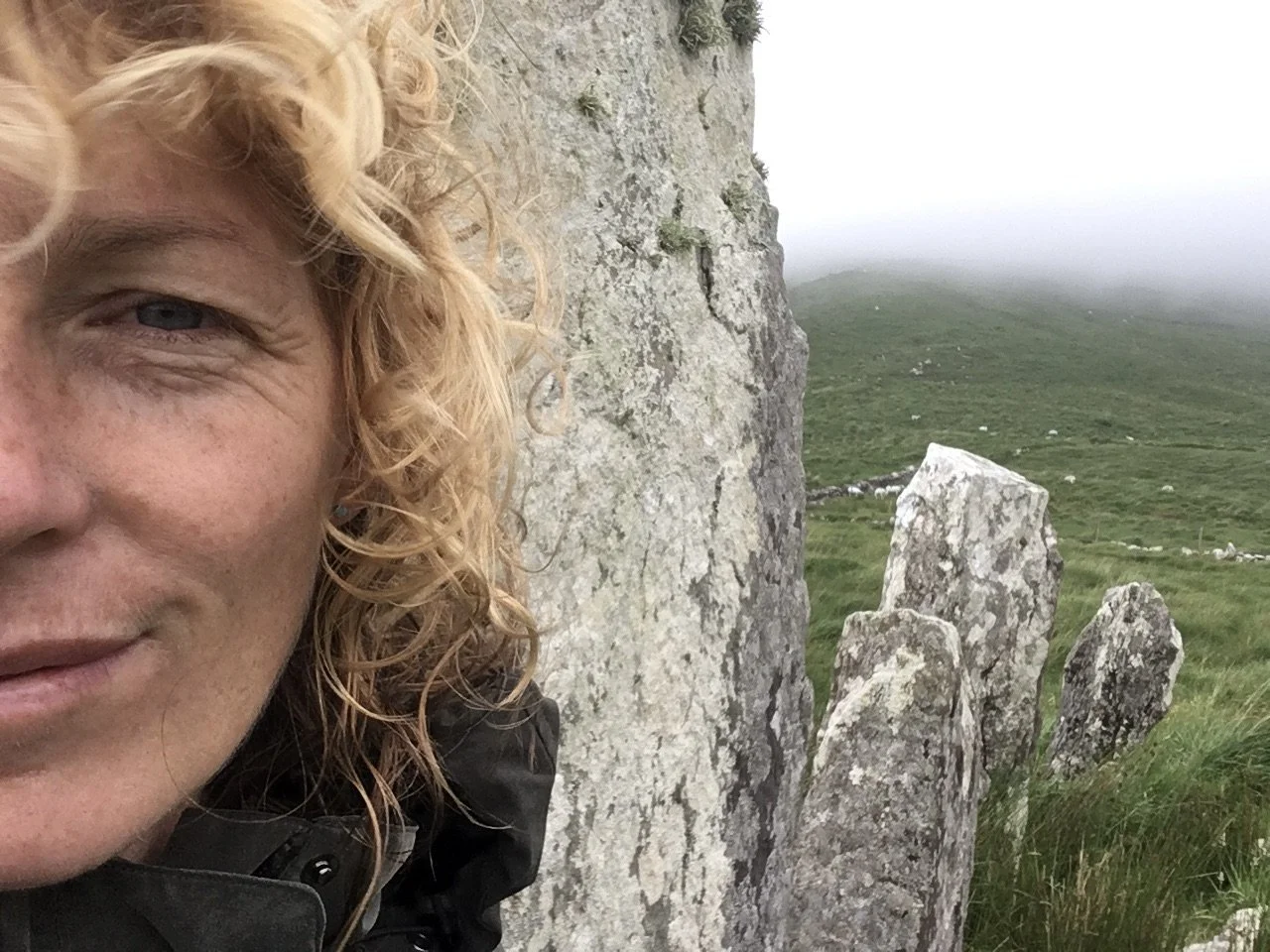
FYDLE was written on an epic solo journey funded by prize money and thrift. A quest into the mountains of Cymru/Wales, into the psyche of the Éireannach/Irish and the colonial power that lurks there still. Learning the languages her great-great grandmothers were forbidden to speak, Jenny studied Cymraeg/Welsh and Gaeilge/Irish at the same time as composing FYDLE. Her inspirations in these lands were many and included:

Tír Na nOg -  a super natural place of creativity believed to exist offshore of the Atlantic Ocean.

Castell Caernarfon/ Caernarfon Castle-  an immense medieval fortress built by British royalty to subjugate the Welsh and now owned by the Welsh people who charge English tourists a fortune to enter.

Visiting the concert halls of Europe and the Tithe Tábhairne/taverns of Donegal, Jenny found equal drama in both. This work is no sentimental homage to folk music. Rather it flips the bird to the folk police, the patriarchy and to colonial power in three sweeping movements. 
Concert Programming Ideas

Concert Program #1
An Irish perspective

             Ina Boyle  The Magic Harp  

Jenny M. Thomas   Fydle Double Violin Concerto  

Vaughan Williams   Symphony No. 5

Approx 2 hours including interval

Born in 1889 Ina Boyle was a prolific Irish composer who first learnt music from her father in Enniskerry before becoming a student of composition with Vaughan Williams in London.  In 1937, a letter from Vaughan Williams declared his support for her: ‘it is most courageous of you to go on with so little recognition. The only thing to say is that sometimes it does come finally’. The outbreak of the Second World War in 1939 severed Boyle from her professional life in London and only recently has her music been recognised for its technically astute instrumental scoring and harmonic experimentation.

Whilst the Second World War was raging Vaughan Williams composed his Fifth Symphony, one of the pinnacles of his artistic achievements. Music was for Vaughan Williams, after all, ‘the one thing that defies bombs and blitzes’. Though he rarely quoted folk song in his works, its influence in terms of atmosphere and the shaping of melody is ever present. Deeply rooted in the sounds of the English countryside, Vaughan Williams was determined to not allow the potent influence of the great Austro-Germanic masters to dominate his music. ‘What matters,’ he said, ‘is to be true to oneself’.

Named after the 14th Century term for a stringed instrument, FYDLE was composed primarily in Ireland and Wales. Visiting the concert halls of Europe and the Tithe Tábhairne/taverns of Donegal, Jenny M. Thomas found equal drama in both. This work is no sentimental homage to folk music, rather a joyous exploration of contrasting traditions in the hope to find what Milan Kundera describes as “a tunnel beneath history, a tunnel that preserves much of what wars, revolutions, civilizations have long since destroyed aboveground.”

Thomas’ work has been influenced by both Vaughan Williams’ superb understanding of the violin and his ability to infuse the transcendence of folk song into his works without sacrificing any classical subtlety.

Concert Program #3  -
A Classical focus

Mozart Don Giovanni Overture  

Jenny M. Thomas Fydle Double Violin Concerto

Sibelius Symphony No. 5  

Approx 90 min including interval

The archetype of the classical style, Wolfgang Amadeus Mozart was exceptional for writing in all the genres of his day and excelling in every one. His father was the author of a famous violin-playing manual and he toured Mozart and his equally talented sister Nannerl across Europe playing the violin and harpsichord. The young Mozart children took pleasure in improvising on the pieces they presented at court, a skill not at all unexpected for musicians of the time.

In 1779 Mozart wrote his Sinfonie Conertante for Violin & Viola. Jenny M. Thomas performed the solo viola part of this iconic work in 1990, emerging as a classical violist in Naarm/Melbourne. Since then she dreamt of writing her own double violin concerto and the vitality and sublime melodies of Mozart’s Sinfonie Conertante was a major influence on Fydle. Named after the 14th Century term for a stringed instrument, FYDLE was composed primarily in Ireland and Wales. Visiting the concert halls of Europe and the Tithe Tábhairne/taverns of Donegal, Thomas found equal drama in both. This work is no sentimental homage to folk music, rather a joyous exploration of contrasting traditions in the hope to find what Milan Kundera describes as “a tunnel beneath history, a tunnel that preserves much of what wars, revolutions, civilizations have long since destroyed aboveground.”

In Jean Sibelius’ Fifth Symphony he explores a musical language that mimics improvised music, creating the impression that the music is developing even as it proceeds. Using an event he witnessed as inspiration - a flock of sixteen swans, soaring upwards for their migration from the lake overlooked by his house - Sibelius reminds us that through nature, we can transcend life’s agonies. Evoking nature’s divine logic, the work mirrors the cyclic nature of Finnish folk music, and the Finnish seasons as the Fifth Symphony is filled with rotating cells of continuous development which end up where they began.

Concert Program #2 
A Welsh tilt

William Mathias Dance Overture For Orchestra  

Jenny M. Thomas Fydle Double Violin Concerto  

Béla Bártok Concerto for Orchestra  

Approx 90 min including interval

Growing up in a musical household in the Welsh countryside, William Mathais was raised amongst rich traditions of his land and community. His compositional style was influenced by his 20th Century contemporaries amongst whom was Béla Bartók. This can be heard in Mathais’ energetic and dance-like rhythms, or was his optimistic and buoyant sound a reflection of the folk song and Celtic myths that informed his work?

Béla Bartók, a prodigious scholar and collector of folk songs, is widely considered one of the greatest musicians Hungary has ever produced and one of the most influential composers of the 20th Century. The Classical Music Encylopedia explains how Bartók worked with traditional themes:

For some of the melodies he collected he composed settings, which keep the tunes themselves intact providing them with often adventurous harmonizations. But Bartók aimed at more than mere quotation, seeking rather to absorb the complex modal structure of peasant melodies, which he saw as a means of freedom "from the tyrannical rule of the major and minor keys”.

Jenny M. Thomas remembers clearly the first time she played Bartok’s Concerto for Orchestra when studying viola at the VCA School of Music. Bartok’s ability to use the power of folk music as a source of passion and inspiration rather than a minor distraction in his music have informed her own work ever since. Thomas’ concerto is also no sentimental homage to folk music, rather a joyous exploration of contrasting traditions in the hope to find what Milan Kundera describes as “a tunnel beneath history, a tunnel that preserves much of what wars, revolutions, civilizations have long since destroyed aboveground.” Named after the 14th Century term for a stringed instrument, FYDLE was composed primarily in Ireland and Wales. Visiting the concert halls of Europe and the Tithe Tábhairne/taverns of Donegal, Thomas found equal drama in both the traditional folk music session and the classical concert stage.

The term folk music was popularised by the Folk-Lore Society (estd. London 1878) in response to “the deleterious effect of the advent of mass-consumerism”. But folk music has never been a pure voice. It is so much more interesting. Questions: 

Can traditional music offer up a critique of modernity? 

Can the disasters and disenchantments of our present time be remedied by what Milan Kundera describes as “a tunnel beneath history, a tunnel that preserves much of what wars, revolutions, civilizations have long since destroyed aboveground.”?

Contact:

Jenny M. Thomas

fiddledidee@gmail.com

+61 (0)419 516 088

@jennymthomasmusic